For years, dealerships focused on one single goal: ranking on the first page of Google. If you could buy enough Google Ads or optimize your website to rank in those coveted ten blue links spots for terms like “used cars near me,” you won’t have trouble finding buyers.
But today, millions of consumers are shifting how they research. Instead of scrolling through pages of search results and opening dozens of browser tabs, they are turning to AI assistants like ChatGPT, Google Gemini, and Perplexity to do the legwork for them. They are asking highly conversational, complex questions (such as, “What’s the most reliable SUV for a family of five under $30,000 near me?”) and expecting a single, synthesized, trusted recommendation.
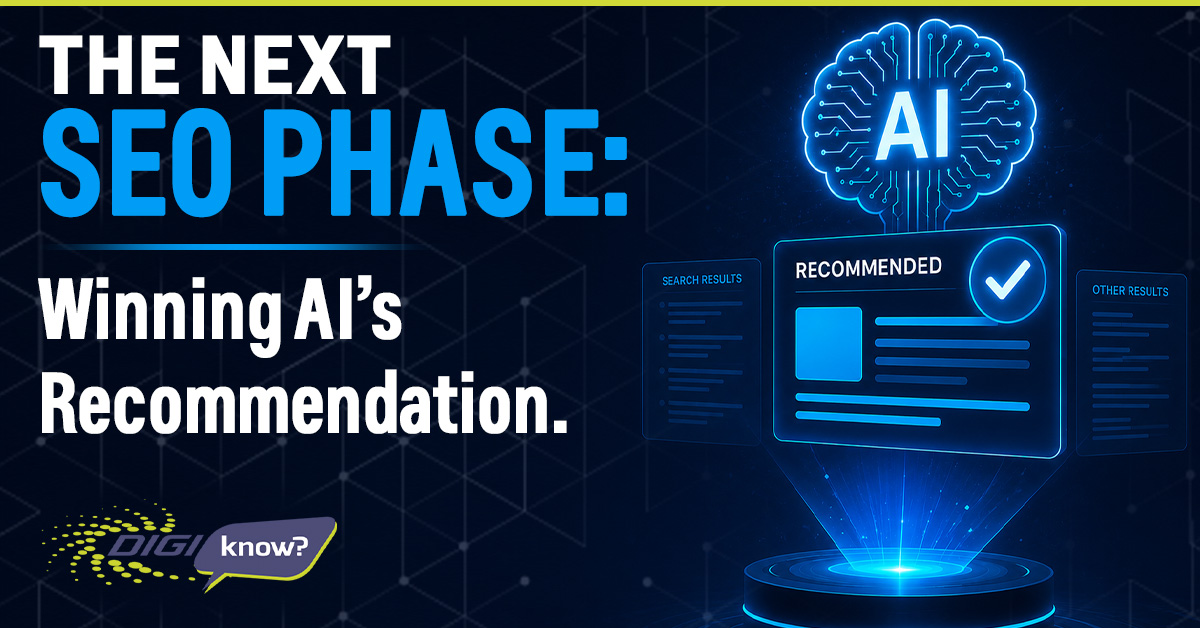
This transition has completely shifted the marketing goalposts beyond just about being listed. You want your dealership being recommended by name.
So, why does AI recommend one dealership over another?
The answer isn’t as simple as who has the deepest pockets or the biggest advertising budget. Instead, AI engines evaluate a web of digital signals to determine which businesses are credible, reliable, and relevant to a shopper’s exact needs.
If you want your store to be the one AI points to, here are the eight key signals you need to optimize.
Your Website Answers Real Customer Questions
Traditional search queries are short, but AI search queries are highly conversational, averaging 23 words compared to just 4 words on traditional search engines. Car buyers are asking complete questions like:
- “What’s the best SUV for a growing family?”
- “Should I lease or finance a truck right now?”
- “What’s included with Certified Pre-Owned vehicles?”
To win in this environment, you must adopt an “answer-first” content structure. Research shows that placing a clear, direct, 40-to-60-word answer in the first 30% of your page drastically increases your chances of being cited by an AI engine. Lead with the answer, and then provide the deeper, supporting details below.
Your Business Information Is Highly Consistent
AI does more than read your website. It crawls Yelp, Bing Places, Apple Business Connect, and local business directories to verify who you are. If it finds mismatched information – like a slightly different phone number or conflicting sales hours – the AI’s confidence drops. To protect itself from giving bad directions or recommending a closed store, the AI will simply omit your dealership from the answer. Enforcing strict consistency across all your Name, Address, Phone, and Category (NAP+C) data is the baseline for being recommended.
Your Reputation Matches Your Claims
While AI systems will calculate your average star rating, they also perform deep natural language processing on the actual text of your reviews. They search for thematic sentiment – identifying whether terms like “transparent pricing” or “hassle-free process” show up consistently.
Furthermore, AI values review velocity over a stale, perfect score. A dealership with a 4.3-star rating and 800 recent reviews will often beat out a 5.0-star dealer with only 30 reviews, because the larger signal pool is more trustworthy to the machine learning model. Implementing tools like automated review builders can generate up to 4x more positive reviews, building the robust reputation ecosystem AI demands.
Your Content Demonstrates Genuine Expertise
AI models are programmed to favor the SEO standard: E-E-A-T (Experience, Expertise, Authoritativeness, and Trustworthiness). Dealerships that publish high-quality, data-rich vehicle comparisons, buying guides, and educational content stand out.
According to a landmark study on Generative Engine Optimization (GEO) conducted by researchers from Princeton and Georgia Tech, adding specific, verifiable statistics and citing credible sources can lift your visibility in AI search results by up to 40%. Think beyond the promotion. Inject exact numbers, pricing, and vehicle specifications into your copy so the AI has concrete data to cite.
Your Website Is Clean and Readable (for AI)
Even the best content will be ignored if AI crawlers struggle to interpret it. AI-optimized sites must load lightning-fast, aim for Google PageSpeed scores of 100/100, and employ structured data.
By implementing JSON-LD schema markup – specifically Vehicle, Offer, and LocalBusiness tags – you add a machine-readable layer to your website. This structured data explicitly defines your inventory, pricing, hours, and location, allowing AI to confidently parse and recommend your vehicle detail pages (VDPs).
Your Information Is Current and Synchronized
AI values real-time accuracy. If an AI engine recommends a vehicle to a shopper, only for the shopper to find out that the car was sold two days ago or the price was incorrect, it degrades the AI platform’s user experience. Dealerships must utilize technologies like IndexNow and real-time DMS-synchronized inventory feeds. Keeping your data fresh tells the AI that your website is active, accurate, and safe to recommend.
Your Dealership Is Mentioned Across the Web
AI systems seek independent validation. If your brand is only mentioned on your own website, the AI views it as self-assertion. To build real digital authority, you need high-quality, external mentions on third-party automotive blogs, local news publications, and industry directories. The more independent, credible websites that reference your store, the more the AI’s algorithms will trust your business’s prominence.
Your Customers Talk About Your Unique Value
The language your customers use in their feedback shapes your brand’s semantic profile. If your reviews are filled with detailed customer stories praising your “no-hassle buying” or “same-day service department response,” the AI associates those exact positive attributes with your brand. When a user asks an AI assistant for a “transparent and fast dealership near me,” the engine matches the customer’s conversational phrasing to the semantic themes in your reviews.
AI Search Isn’t Traditional SEO
Traditional search engines rank pages based on links and keyword density. AI search engines synthesize answers based on trust, entity clarity, and context.
Instead of asking, “Which of our pages ranks first on Google?” dealerships must begin asking a different set of questions:
- Are AI-generated answers actively citing our dealership?
- Does the AI understand our inventory and what makes us different?
- What sentiment is the AI associating with our brand name?
The Dealerships That Win Will Be the Ones AI Understands Best
As AI-driven discovery continues to capture a larger share of the car-buying journey, paid advertising and legacy keyword SEO are no longer enough. The future belongs to the dealerships that build an open, technically flawless, and highly consistent digital footprint that AI engines can easily find, trust, and recommend.
If you aren’t sure where your dealership stands in this new digital landscape, now is the time to find out. Chumney & Associates is here to help. Contact us today and let our digital marketers give you the exact roadmap you need to capture these ready-to-buy shoppers.